First phone for kids: what to buy at ages 6 to 12
A first phone has one job at this age: let your child reach the people you approve. Here are five options compared on cost, controls and fit, and when a home phone is the right first step. We make Ring Ring Club, so we also say where it does not fit.
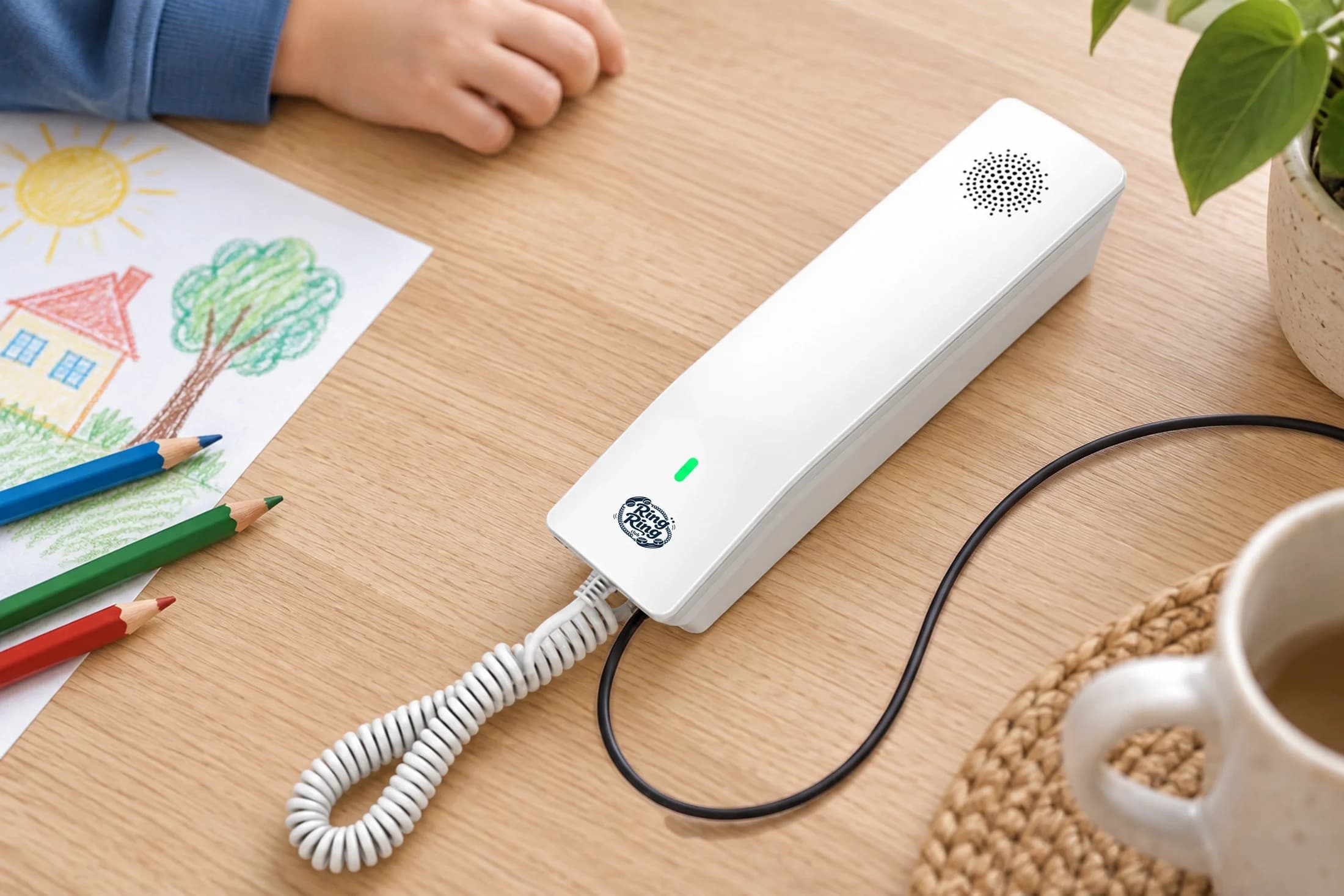
Home phone from
$59
One time, Bridge adapter
Starter plan
$0/mo
Calls between Ring Ring families
Paid plan
$8.95/mo
Full number, calls to any approved US number
What should my child’s first phone be?
If your child is 6 to 12 and mostly needs to call family and friends from home, start with a home phone. It has no apps or browser, you approve who can call, and there is no phone to lose at school.
If your child needs to reach you away from home, a kids’ smartwatch or a locked-down kids’ cell phone fits better. A smartphone is the last step, not the first.
Most families do not need to pick a birthday. They need to name the call their child wants to make and where it will be made from. The rest of this page works backward from that.
We make Ring Ring Club, which is a home phone, so weigh our view accordingly. Other brands’ prices come from their US sites, last checked September 2026, before sales tax.
What a first phone should and should not do
At ages 6 to 12 the list is short.
Should: reach the people you approve
Grandparents, a best friend, you. Your child dials or answers, and you decide who is on the list.
Should: be easy to build on
A first phone sets the baseline. Start with calls and add features when your child asks and the reason holds up. Taking features away later is harder.
Should not: open the web or a feed
Browsers, video apps and group chats are a separate decision for later. A first phone does not need them to do its job.
Should not: become a daily chore
If the controls need weekly attention they stop getting it. Pick something you will still be managing in month six.
First phone options compared
Prices are US, before tax. Where a price depends on the model or the carrier, the table says so instead of guessing. For home phone totals over one and two years, use the cost calculator.
| Option | Goes with your child? | Screen | Typical cost | Parent controls |
|---|---|---|---|---|
| Home phone (Ring Ring, Tin Can, Ooma, Pinwheel Home) | No, it stays at home | None on Ring Ring’s kits | $59 to $100 for the phone, then $7.99 to $9.99/mo to call any number. Ring Ring, Tin Can and Pinwheel Home also have a $0 plan with limited calling. | Parent-approved contacts on all four |
| Kids’ smartwatch | Yes | Small screen | The watch plus a monthly cellular plan. Prices vary by brand, so none is listed here. | Approved contacts and location on many models; check each one |
| Locked-down kids’ cell phone (Gabb and similar) | Yes | Yes, with limited apps | Gabb Phone 4: $169.99, then $29.99/mo on the Standard plan with a two-year contract. | Set by the maker; varies by brand |
| Basic flip phone | Yes | Small screen; camera and texting are common | The phone plus a carrier plan. Varies by model and carrier, so none is listed here. | Mostly what the carrier offers; varies |
| Smartphone with controls | Yes | Full screen, apps and browser | The phone plus a carrier plan. Varies widely, so none is listed here. | Strong built-in tools such as Apple Screen Time and Google Family Link; you manage them |
Which first phone fits which child
Each option answers a different problem. Match the problem first.
A home phone
Suits a child who wants to call grandparents and friends from home and a family that wants nothing to manage beyond a contact list. It does not help when you need to reach your child at soccer practice, and it stops working when the power or internet is out.
A kids’ smartwatch
Suits a child who walks to school or activities and needs a quick call to a parent without a phone in a pocket. It has a screen and usually a monthly cellular plan, and features such as texting and location vary by model.
A locked-down kids’ cell phone
Suits a child who needs a phone they carry, such as one splitting time between two homes. Gabb Phone 4 is $169.99 plus $29.99/mo on its Standard plan with a two-year contract. It is limited, not screen-free.
A basic flip phone
Suits a family that wants calls and texts on the move and the simplest handset. Check what the model and carrier allow, since many have a camera and texting. See screen-free phone for kids for how a flip phone compares with a home phone.
A smartphone with controls
Suits an older child who needs maps, a team chat or school apps, with a parent who will manage Screen Time or Family Link. It is the most to manage and the hardest to take back.
Home phones compared: Ring Ring, Tin Can, Ooma and Pinwheel Home
All four are real phones that run on your home internet. The differences are price, free plans, 911 and whether you can use a phone you already own. Totals side by side are in the cost calculator, and the full buying case is in landline for kids.
Ring Ring Club
Bridge $59 (bring a compatible analog phone, connects with Ethernet), Modern Kit $75 (Wi-Fi handset) or Nostalgic Kit $89 (corded classic, Bridge included). Starter is $0/mo for calls between Ring Ring families; the paid plan is $8.95/mo, or $96.66 a year. 911 needs the paid plan and a verified address.
Tin Can
$100 handset, then $9.99/mo on the Party Line plan (first month free). Its free Can 2 Can plan includes 911, which ours does not. Returns run 45 days. Tin Can uses its own hardware. More in Ring Ring vs Tin Can.
Ooma MyPhone
$99.99 direct bundle (retail prices can differ), then $7.99/mo plus local taxes and regulatory fees. No free plan; 911 is included with service. A fit if you want an established phone company behind it. More in Ring Ring vs Ooma MyPhone.
Pinwheel Home
Spark $79 or Classic $99 at regular price. The free Pinwheel Circle plan calls other Pinwheel Homes and parent-approved contacts, with 911 included. The Unlimited plan, for any outside number, is $9.99/mo. 30-day money back.
What age should a kid get a first phone?
Age alone does not settle it. Here is the honest range; the longer version is what age a kid should get a first phone.
Ages 6 to 8
Calls to grandparents, cousins and a best friend, usually from home. A home phone covers this, and your child still has you nearby, so a phone they carry is rarely needed.
Ages 9 to 12
Where independence starts. Walking to school or activities alone points toward a smartwatch or a kids’ cell phone. If your child is home after school, a home phone can still be enough.
Ages 13 and up
Many families revisit the smartphone question around now. A home phone can stay in the house while you decide which apps, if any, come next and in what order.
Signals that matter more than the birthday
They go places without you. They ask to call a friend, not just message one. They have people to talk to, like a grandparent far away. Constant requests for apps are a different signal and call for a smartphone talk, not a first phone.
Why a home phone is a good first step, and when it is not
A home phone matches how most 6 to 12 year olds use a phone: calling a grandparent, a cousin or a friend from the kitchen or the hallway. Calls happen in a shared space where you can hear how they go, there is no device to lose at school, and nothing on it competes for their attention. You choose who can call and who they can call before it ever rings.
It is also the easiest first phone to take slowly. Starter is free, a full phone number can come later if the phone earns its place, and hardware has a 30-day return. A first phone that does one thing is easier to build on than a smartphone is to walk back.
It is not the right first phone if your child needs to reach you away from home. A home phone stays put. It also goes down when the power or internet does. On Ring Ring, 911 works only on the paid plan with a verified address, and Starter cannot call cell phones, outside landlines or 911. If any of that is a dealbreaker, look at a smartwatch or a kids’ cell phone above.
Setup, from box to dial tone, is in how a Wi-Fi landline works. If you are still weighing a home phone against a flip phone, Gabb or Pinwheel, read the screen-free alternatives compared.
What you control on a Ring Ring first phone
Parent controls are included on every plan, from the parent app or the web dashboard.
Approved contacts (Trusted Circle)
Choose who can call and who your child can call. Your child’s Trusted Circle holds connected Ring Ring families and parent-approved contacts, and you can set Quick Dial slots for the people they call most.
Quiet hours
Set the phone to go quiet during dinner, homework or bedtime, on the schedule that suits your family.
A kill switch
Turn the phone off from your own phone when you need to. Turn it back on the same way.
Start at $0/mo, add the full phone number when you want it
Starter plan
$0/mo
Calls between connected Ring Ring families, up to 9 quick dials. No calls to regular numbers and no 911. Hardware is bought separately.
Paid plan
$8.95/mo
A full ten-digit number and calls to parent-approved US and Canadian numbers. 911 needs a verified address, power and internet. Or $96.66 a year. Month-to-month, cancel anytime.
Hardware
$59 to $89
Bridge $59 (bring a compatible analog phone, connects with Ethernet). Modern Kit $75 (Wi-Fi handset). Nostalgic Kit $89 (corded classic, Bridge included). One-time, 30-day returns.
First year with a Bridge and a phone you own: $166.40 on the monthly paid plan, or $155.66 on the annual one, before sales tax. Look at the kits on the Bridge, Modern Kit and Nostalgic Kit pages. Already own a phone? See the Bridge adapter. For costs across every kind of kids phone, see the affordable phone for kids breakdown.
What a Ring Ring first phone looks like.
Hardware is a one-time purchase. Starter is free and connects Ring Ring families; a full phone number, calls to regular numbers and 911 need the paid plan.
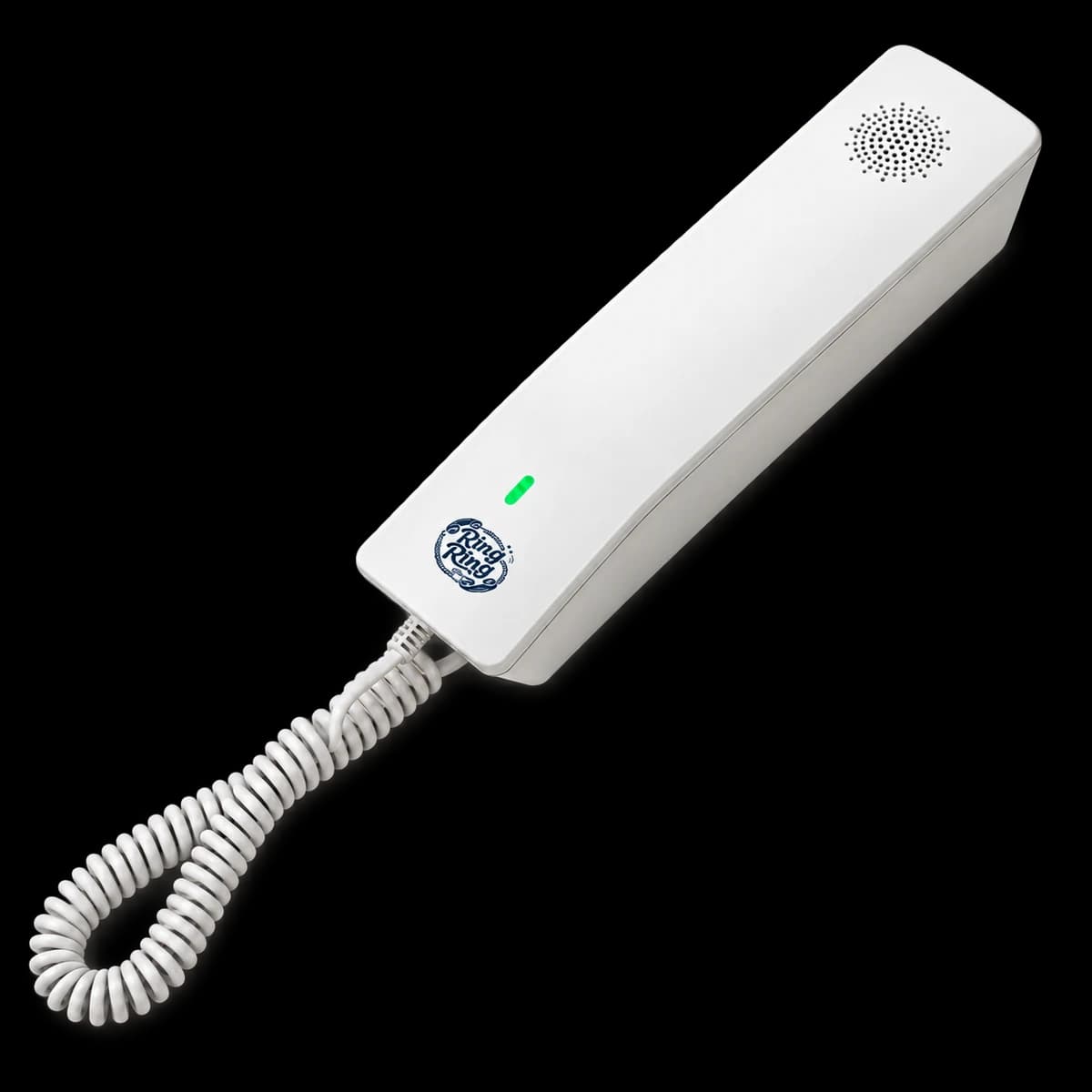
The Modern Kit
$75
Wi-Fi handset, ready out of the box. Black or white.
Pick the Modern Kit →
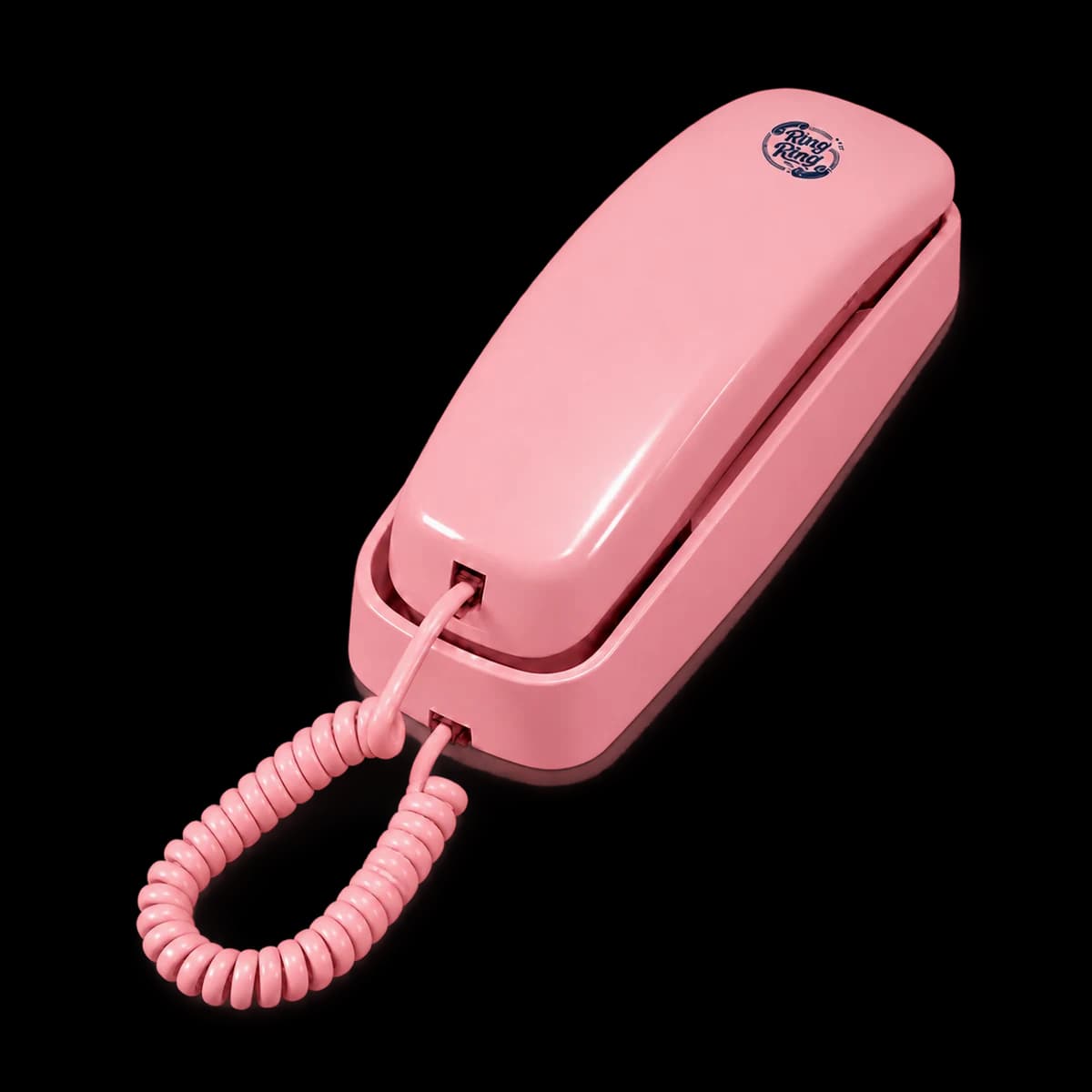
The Nostalgic Kit
$89
A real corded classic, pre-wired with our Bridge. Black, white, or pink.
Pick the Nostalgic Kit →
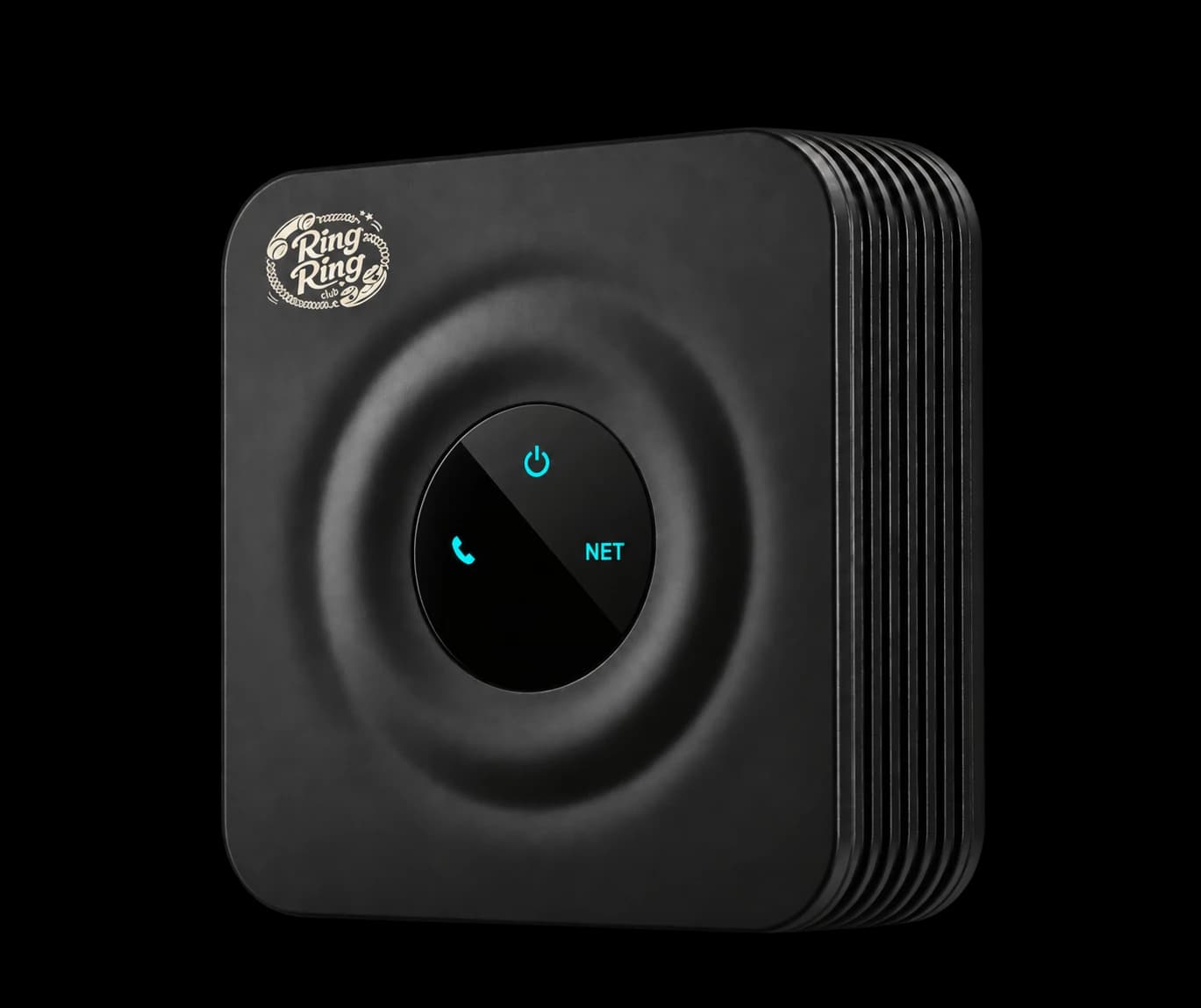
Bridge Only
$59
Plugs into your router and pairs with a compatible analog phone you already love.
Pick the Bridge →
First-phone questions
What should a kid’s first phone be?
It depends on where your child needs to call from. For ages 6 to 12 who mainly call family and friends from home, a home phone is a good first phone: no apps, no browser, and contacts you approve. For a child who needs to reach you away from home, a kids’ smartwatch or a locked-down kids’ cell phone fits better. A smartphone is rarely the right first step.
What is the right age for a first phone?
There is no single right age. Ages 6 to 8 usually suit a home phone for calling family and friends. Ages 9 to 12 depend on how independent your child is: walking to school or activities alone points toward a phone they carry. Some families wait on a smartphone until the teen years. Start with the call your child needs to make, not the birthday.
Is a smartwatch a good first phone?
It can be, for a child who walks to school or activities and needs a quick call to a parent. Most kids’ smartwatches need their own cellular plan, and models differ on screens, messaging and location sharing, so check what each one allows and what the plan costs. A watch goes with your child, which a home phone does not.
Should a first phone be a smartphone?
Usually not at ages 6 to 12. A smartphone bundles three things: reaching people, messaging, and the open internet. A first phone can do the first without the rest. If your child needs a smartphone later for maps, school apps or a team chat, you can add one with that reason in hand.
Is a home phone a good first phone?
Yes, for the right child. It has no apps or browser, calls happen in a shared space, and you approve the contacts. Its limits: it stays at home, needs power and internet, and on Ring Ring 911 works only on the paid plan with a verified address. Tin Can and Pinwheel Home include 911 on their free plans.
How much does a first phone cost?
A home phone costs $59 to $100 for the device, then $0 to $9.99/mo depending on the plan. A kids’ cell phone such as the Gabb Phone 4 is $169.99 plus $29.99/mo on its Standard plan with a two-year contract. Smartwatch, flip phone and smartphone prices depend on the model and the carrier plan, so we do not quote one.
Is there a free first phone?
Ring Ring’s Starter plan is $0/mo and calls other connected Ring Ring families, with up to 9 quick dials. It cannot call cell phones, outside landlines or 911. You still buy the hardware, from $59. A full ten-digit number, calls to regular numbers and 911 need the paid plan ($8.95/mo) and, for 911, a verified address.
How does Ring Ring connect to the internet?
The Modern Kit ($75) is a Wi-Fi handset that connects over your home network after its first setup. The Bridge ($59) connects to your router or mesh unit with an Ethernet cable and gives a compatible analog phone its connection. Both need power and working internet, so the phone is down in an outage.
How do I introduce a first phone without it taking over?
Start narrow. Pick a phone that does one thing well, keep it in a shared space such as the kitchen counter or the hallway, and add features only when your child asks and the reason holds up. Adding is easier than taking away, so begin with calls.
Will my kid feel left out without a smartphone?
Some will say so. A phone that rings gives your child a way to talk to friends now, and you can tell them why it is the right size for their age and when you will look at it again. Naming the reason and a review date makes the rule easier to live with than a flat no.